
On World Water Day, a global awareness date highlighting the growing scarcity of this resource and the urgent need for responsible water use, Jeanologia presents its Ecological Profit and Loss Account, a pioneering model that measures the positive impact generated by the implementation of its technology in the textile industry.

In a global context where water has become one of the planet’s most pressing challenges, the company is putting figures behind a transformation already underway: reshaping denim production by eliminating polluting processes and drastically reducing resource consumption.
Since 2015, Jeanologia has been auditing and publishing this Environmental Profit and Loss Account, becoming the first company in the sector to systematically quantify the positive environmental impact derived from the use of its technologies. The model measures two key indicators:the volume of polluted water avoided and the reduction of CO₂ emissions, turning sustainability into a tangible and verifiable result.
Thanks to the global implementation of its technologies, more than 21.5 million cubic meters of polluted water were avoidedin 2025, equivalent to the annual water consumption of a city like Copenhagen. In addition, over 103 million kilograms of CO₂emissions were reduced, comparable to the amount of carbon absorbed in one year by a forest of more than 20,000 hectares.
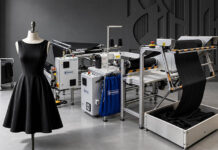
This impact is the result of integrating technologies developed by Jeanologia, including laser, G2 ozone, low consumption eco washers, e-Flow nanobubble technology, H2 Zero water recycling systems, and Colorbox sustainable dyeing solutions. These innovations enable the elimination of toxic processes, drastically reduce water usage, and support zero-discharge production models.
Today, more than 5,000 machines installed across over 70 countries are transforming denim production processes, reducing intensive water and chemical use, minimizing inefficient manual processes, and producing for some of the world’s leading brands.
In addition, Jeanologia provides the industry with its EIM (Environmental Impact Measurement) platform, a tool that acts as a compass to measure, monitor, and improve the environmental impact of production processes, enabling brands and manufacturers to make data-driven decisions and move towards more responsible production.
“For years, sustainability was understood as a future commitment. Today, it is a measurable reality already in motion. The industry has the technology, the knowledge, and the responsibility to operate within the limits of the planet,” states Enrique Silla, CEO and founder of Jeanologia.
With this initiative, the company reinforces its role as a driving force for change within the textile industry, demonstrating that sustainability and efficiency can go hand in hand when there is real implementation at scale.
Through its ‘Mission Zero’ roadmap, Jeanologia continues to advance towards a dehydrated and detoxified textile industry, where water consumption is reduced to a minimum and environmental impact is eliminated.
At a time when access to water is one of the world’s greatest challenges, Jeanologia calls on the entire value chain–brands, manufacturers and consumers– to accelerate the transition towards more responsible production models. Because the future of fashion is defined not only by design, but by how it is made.