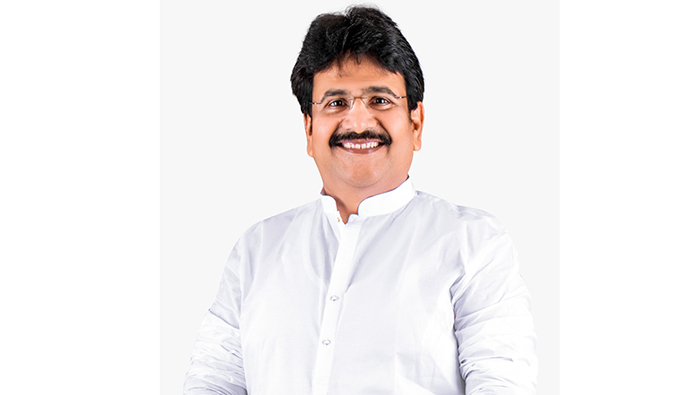
Q1. Can you share the journey of Ajmera Fashion and what inspired you to start it?

Ajmera Fashion was founded in 2011, and the inspiration behind it came from something I witnessed repeatedly during my years in the industry. Small retailers, first-time entrepreneurs, and women wanting to start a home-based clothing business were regularly being turned away by manufacturers. Minimum order quantities were too high, access was limited, and the system was simply not designed for them. That is what pushed me to build something different.
We started with sarees, which remain our strongest and most evergreen category even today. From there, the range expanded steadily into kurtis, lehengas, men’s wear, kids’ wear, and home furnishing, essentially covering the full spectrum of Indian ethnic and lifestyle apparel.
The early milestones shaped who we are. In 2012-13 we started our YouTube channel, at a time when very few textile manufacturers were thinking about digital. By 2015 we had achieved ISO certification. In 2017 we began exporting apparel across the globe and simultaneously launched the “Har Ghar Business” mission, which was really the formal expression of our founding idea, giving every household the opportunity to run its own clothing business. That same year we became the first manufacturer in Surat to deal directly with retailers without any intermediary.
2018 brought another first, we set up an exclusive call centre for customer service, something unheard of in our segment at the time. In 2020 we were featured in Forbes magazine. By 2022 we were serving over one lakh retailers. In 2023 we launched the Ajmera Trends franchise, and by 2025 we had opened over 300 Ajmera Trends and Little Wings stores across India in record time.
Today we export to over 32 countries and continue to grow. But the founding purpose has never changed. It was always about making opportunity accessible to those the industry had overlooked.
Attached – Milestones Graphics.
Q2. What sets Ajmera Fashion apart in today’s competitive fashion industry?
If I had to pick the most defining difference, it would be our direct-to-retailer model. When we started, manufacturers in Surat worked through intermediaries. We chose to deal directly with retailers, giving them better pricing, faster communication, and a more honest business relationship. We were the first in Surat to do this.
Because we manufacture in-house, we have real control over quality and pricing. That consistency is something our retailers have come to rely on.
Our digital journey also sets us apart. Starting YouTube in 2012 when the industry had not even thought about it built us a community of millions across different digital platforms, and today we have a digital presence in every major Indian language.
But what I am most proud of is the inclusion at the heart of what we do. From day one we welcomed small retailers and first-time entrepreneurs, people the industry had overlooked. Over 10,000 women have become financially independent by selling sarees from home through our network, and over 1.5 lakh retailers and entrepreneurs are part of the Ajmera family today. That, along with the Champions of Change award we received, reflects the kind of impact we have always aimed for.
Q3. How do you decide which trends to incorporate into your collections?
In India, fashion does not move in one direction. What sells in Punjab looks very different from what moves in Kerala or West Bengal. So trend-spotting for us is less about following global runways and more about staying deeply connected to what is actually happening at the ground level across different states and markets.
Our design team continuously tracks regional preferences, color cycles, and fabric trends. We also pay close attention to Bollywood, television, and social media, because in India, what appears on screen or goes viral online often becomes the next demand in the market within weeks.
But honestly, our biggest source of trend intelligence is our retailer network itself. When you have over 1.5 lakh retailers giving you real-time feedback from across the country, you develop a very accurate sense of where demand is heading. That ground-level pulse, combined with being based in Surat which is one of the world’s most active textile hubs, means we are rarely caught off guard by a shift in preference.
Q4. What challenges did you face in establishing your brand, and how did you overcome them?
In the early days, people used to refer to us by our shop number rather than our name. That told me everything about where we stood as a brand. Building an identity in a market crowded with established players was perhaps the central challenge of those years.
We also had to reach the small retailers we had built our model for, because they simply did not know we existed. That need is actually what pushed us towards YouTube and digital content, long before most in the industry took it seriously.
Around 2013 and 2014, my partners moved on because the business was taking time to gain momentum. I was managing alone, with godowns full of stock and very few buyers. My house, my car, my wife’s jewellery, everything was committed to keeping things going.
What kept me moving forward was a firm belief in what we were building. We invested in branding, kept posting videos consistently, never compromised on quality, and gradually trust followed. It was slow, but it was steady.
Q5. How do you balance creativity with business sustainability?
The way I see it, creativity and sustainability are not opposites. A design that does not sell is not creative, it is just expensive. And a business that stops experimenting stops growing. The balance comes from staying connected to what the market actually wants.
Our design team tracks trends across regions, draws from Bollywood and social media, and takes constant feedback from our retailer network. That ensures creative decisions are grounded in real demand. We do not chase every trend. We choose the ones that make sense for our customers.
But honestly, a lot of this comes down to having the right team. When your people are genuinely invested in what they are building, creativity and discipline take care of themselves. I am proud of the team at Ajmera Fashion, and their efforts are visible in everything we put out.
Q6. Can you describe a pivotal moment that defined the growth of Ajmera Fashion?
If I have to pick one moment, it would be a video we made with an influencer, somewhere around 2015 or 2016. In that video, I said one line that I believed deeply: “Naukri se kuch nahi badlega, badlegi to bas ghar ki sabzi. Agar zindagi badalni hai, to aapko business karna padega.” My personal mobile number was visible on screen.
The video went viral. Millions of views at a time when that was not a common thing. My phone never stopped ringing. I was answering hundreds of calls every day from retailers, aspiring entrepreneurs, housewives, people who had never thought about starting a business but felt something shift after watching that video.
What that moment taught us was the real power of social media, not just as a marketing tool but as a way to genuinely connect with people. We doubled down on our digital presence after that, invested seriously in content, and built a community that our competitors could not replicate overnight. That one video gave Ajmera Fashion a voice, and everything that followed was built on the foundation that moment created.
Here is Question 7:
Q7. How do you see technology, AI, and data influencing fashion businesses?
Technology is no longer optional in this or any business for that matter. It is the difference between guessing and knowing.
We have been collecting data for years, and today we have a fairly detailed understanding of which states order which categories, in which months, and at what price points. That kind of demand intelligence directly improves how we plan production and manage inventory. It reduces waste and keeps us ahead of the curve.
AI is something we are actively integrating into our planning and operational processes. It is still early days, but the potential to improve forecasting, design trend analysis, and supply chain efficiency is very real and we are moving in that direction deliberately.
On the production side, our digital printing facility has given us much greater design flexibility and faster turnaround on new collections. And on the sustainability front, we are experimenting with bamboo fibre and water-efficient manufacturing, both of which require our teams to continuously learn and adapt.
The fashion businesses that will lead in the next decade are the ones investing in these capabilities today. We intend to be among them.
Q8. Are there plans to expand into categories, regions, or international markets?
Expansion is very much part of the plan, across multiple fronts.
On the international side, we are already present in over 32 countries, we have an office in Kathmandu, but there is a lot of room to deepen that presence. We are working towards building a more structured global footprint, particularly in markets where the Indian diaspora is large and the appetite for ethnic wear is strong.
Within India, our franchise stores, Ajmera Trends and Little Wings have crossed 300 stores and we are continuing to grow. The demand from aspiring franchise partners, particularly in smaller cities and towns, remains very strong and we are focused on meeting that.
In terms of product categories, we already cover a fairly wide range from women’s and men’s wear to kids’ wear and home furnishing. So the focus is less on adding new categories and more on going deeper into the ones we are strong in, improving quality, design, and availability.
We are also working towards our IPO, but it would not be appropriate to share details on that just yet.
Q9. What would you like Ajmera Fashion to be remembered for?
I would rather tell you what I would like Ajmera Fashion to be known for, because “remembered for” sounds like it is going to be a chapter in history, and we are just getting started.
Ajmera Fashion is known for the doors it opens. For the woman in a small town who started selling sarees from home and found her own financial independence. For the young person who wanted to run a retail store but had no idea where to begin. For the small retailer who was turned away everywhere else and found in us a partner who took them seriously.
We started with the belief that this business could be more inclusive, that opportunity did not have to be reserved for those who already had access to it. That belief has not changed, and it will continue to drive everything we build going forward.
The mark we want to leave is simple. That Ajmera Fashion genuinely changed the way this industry treats small entrepreneurs. Everything else will follow from that.